
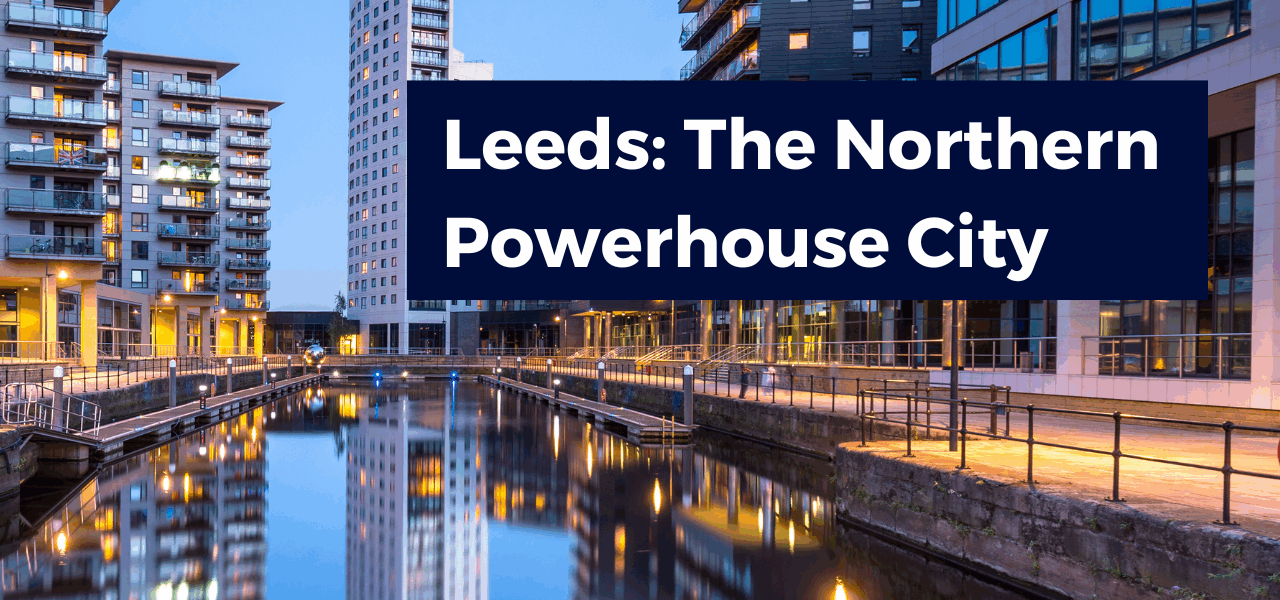
Leeds has quietly evolved into one of the most economically powerful cities in the UK, now boasting an economy worth approximately £40 billion and ranking as the largest regional economy outside London. With over 109,000 businesses and more than 300,000 people employed within the city, Leeds represents a rare blend of scale, diversity, and sustained growth that property investors actively seek. Its position at the heart of the Northern Powerhouse strategy continues to attract both public and private investment, driving long-term demand for residential and commercial property.
A City Dominated by Major Employers Across Multiple Sectors
One of Leeds’ greatest strengths is the sheer diversity of its employment base. Major employers span retail, finance, healthcare, manufacturing, and digital sectors, creating a resilient economy less vulnerable to shocks. Companies such as Asda, Channel 4, Sky Betting & Gaming, and Burberry all have significant operations in the city, alongside major public sector employers including the NHS and HMRC. This diversity is critical for investors, as it supports consistent tenant demand across economic cycles rather than reliance on a single industry.

The Financial and Professional Services Powerhouse
Leeds has firmly established itself as the UK’s leading financial and professional services hub outside London. With over 30 national and international banks, alongside more than 150 accountancy firms, the city attracts a high-income professional workforce. Major institutions such as Aviva, Lloyds Banking Group, and KPMG maintain significant operations here, reinforcing Leeds’ reputation as a centre of financial excellence. For property investors, this translates into strong demand for high-quality city-centre apartments from well-paid professionals.
Retail Giants and Corporate Headquarters Driving Employment
Leeds is home to a significant number of major corporate headquarters, more than any UK city outside London, with over 200 large firms based there. Retail giant Asda alone employs around 145,000 people nationwide and anchors a substantial corporate presence in the city. Other major HQ employers include Leeds Building Society, Jet2, and Yorkshire Bank, all contributing to a strong white-collar workforce. This concentration of headquarters is a key signal for investors, indicating long-term economic stability and sustained inward investment.
The NHS and Public Sector: A Stable Employment Backbone
Beyond private enterprise, Leeds benefits from a powerful public sector employment base. Leeds Teaching Hospitals NHS Trust alone employs over 22,000 staff and serves approximately 1.5 million patients annually, making it one of the largest healthcare employers in the UK. Alongside local government and education institutions, these “anchor” organisations collectively employ over 60,000 people and inject hundreds of millions into the local economy each year. This stability is particularly attractive to property investors seeking dependable rental markets.
Manufacturing, Innovation and Industrial Strength
Leeds is also the UK’s third-largest manufacturing centre, with around 1,800 firms employing approximately 39,000 people. Key sectors include engineering, food production, chemicals, and medical technology. This industrial backbone is complemented by advanced manufacturing and logistics networks, with 50% of the UK’s manufacturing base located within a two-hour radius. For investors, this supports strong demand for both workforce housing and commuter-friendly developments.
The Rise of Digital, Tech and Creative Industries
Leeds has rapidly emerged as a digital and tech hub, with companies such as Sky Betting & Gaming, Rockstar Leeds, and numerous fintech startups choosing the city as their base. The city handles over a third of the UK’s internet traffic and has become a focal point for digital innovation. Government-backed initiatives and private investment continue to accelerate this growth, making Leeds particularly appealing to younger, high-earning renters.
Employment Growth and Labour Market Strength
Leeds maintains a strong employment rate of approximately 74.7%, slightly above the regional average, with nearly 400,000 people in work. While recent data shows some fluctuation, the overall labour market remains robust, supported by continued business investment and population growth. Importantly, the city’s workforce is highly skilled, underpinned by nine universities and numerous colleges feeding talent into local industries.
Future Growth: 100,000 Jobs and £20 Billion Investment
Looking ahead, Leeds City Council has set out an ambitious economic plan to generate £20 billion in additional economic output and create 100,000 new jobs over the next decade. This level of forward planning is crucial for property investors, as it signals sustained demand for housing, infrastructure, and commercial space. Major regeneration projects, particularly in the South Bank area, are set to transform the city centre and double its size.
Why This Matters for Property Investors
From an investment perspective, Leeds offers a compelling combination of affordability, economic growth, and sustained rental demand. Compared to London and much of the South East, entry prices remain significantly lower, yet rental yields are consistently stronger, often outperforming southern markets. This creates a favourable yield-to-price ratio, which is exactly what experienced investors prioritise when building scalable portfolios. The city’s ability to attract both domestic and international capital further reinforces confidence in its long-term trajectory.
Tenant demand in Leeds is not driven by a single demographic. Instead, it is underpinned by multiple, overlapping tenant groups, including young professionals working in finance and tech, NHS staff, corporate relocators, and a large student population exceeding 60,000. This layered demand significantly reduces vacancy risk, which is a key concern for landlords. Even in periods of economic uncertainty, cities with diverse tenant pools tend to maintain occupancy levels and rental stability.
Another critical factor is wage growth and employment quality. Leeds is not just creating jobs, it is creating higher-value roles in sectors such as financial services, digital technology, and professional services. This directly impacts affordability from a tenant’s perspective, allowing landlords to command higher rents for well-located, high-spec properties. In practical terms, this means investors can target a more resilient tenant base with stronger income profiles and longer tenancy durations.
Leeds also benefits from significant ongoing regeneration, particularly in areas such as the South Bank, one of the largest regeneration schemes in Europe. Infrastructure improvements, new commercial spaces, and public realm upgrades all contribute to capital appreciation over time. Investors who enter the market ahead of or during regeneration phases typically benefit from both rental growth and uplift in property values, creating a dual-return strategy rather than relying on yield alone.
Connectivity is another driver that should not be overlooked. Leeds is one of the best-connected cities in the North, with strong rail links to Manchester, London, and the wider Yorkshire region. As transport infrastructure continues to improve, including long-term Northern Powerhouse Rail ambitions, the city becomes even more attractive to commuters and businesses alike. Improved connectivity tends to correlate directly with house price growth and rental demand, particularly in areas close to key transport hubs.
Importantly, Leeds is still in a growth phase rather than at its peak. While it already functions as a major economic centre, the pipeline of investment, job creation, and infrastructure suggests that there is further room for expansion. For investors, this is the sweet spot, entering a market that is proven but not yet saturated. It allows for both income generation today and capital growth in the medium to long term.
Finally, when you step back and assess Leeds holistically, the fundamentals align in a way that is increasingly rare in the UK property market. A large and growing economy, a diverse employer base, strong graduate retention, and ongoing regeneration all point in the same direction. For investors who are serious about building sustainable, income-producing portfolios rather than chasing short-term gains, Leeds represents a strategically sound and data-backed opportunity.
Aire Gardens, Leeds: Investor Case Study
Aire Gardens represents a strategically positioned residential development within one of the most significant regeneration zones in the UK, the £1.4 billion South Bank scheme in Leeds. Located at 3 Leeds City Office Park, Meadow Lane, the scheme places investors directly on the edge of a transformational area that is set to double the size of the city centre. This positioning is not speculative. It is anchored in committed infrastructure, commercial expansion, and long-term urban planning, all of which are critical drivers of both rental demand and capital appreciation.
Development Concept: Low-Density Living in a City-Centre Location
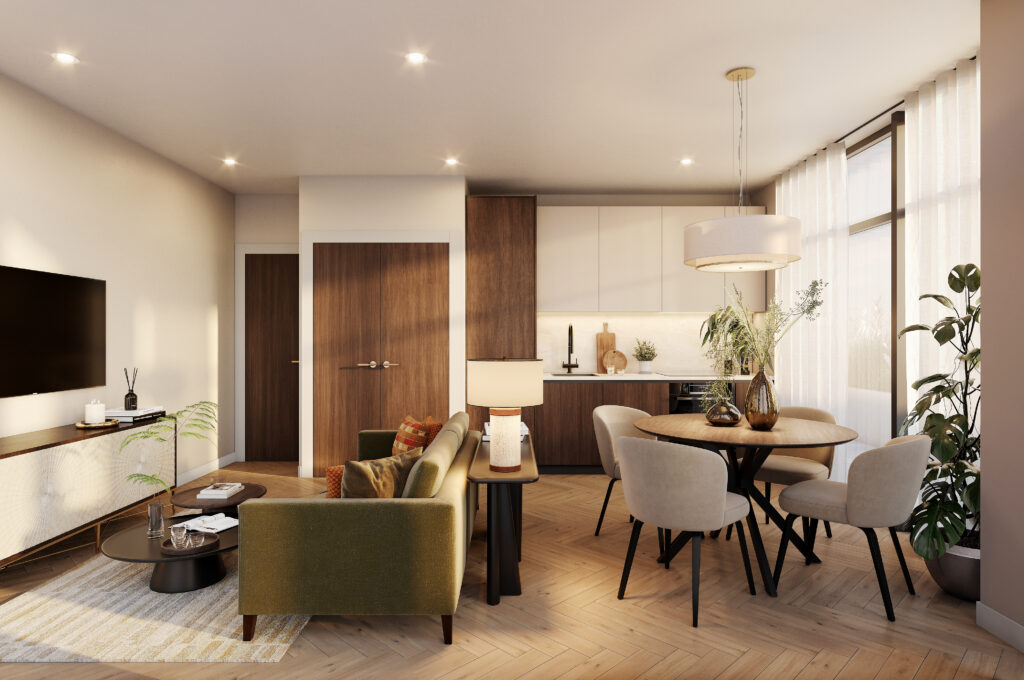
Unlike many Leeds city-centre developments that prioritise density and height, Aire Gardens has been designed as a low-rise, lifestyle-led scheme. Comprising just 98 apartments across three floors, it offers a more considered residential environment, centred around landscaped gardens and a natural stream.
This is a subtle but important differentiation. Lower-density developments tend to attract longer-term tenants, reduce turnover, and create a stronger sense of community. For investors, that translates into lower void periods and more consistent income over time.
Specification and Tenant Appeal
Each apartment is delivered with fully integrated appliances as standard, with selected units benefitting from enhanced specifications such as underfloor heating, upgraded finishes, and premium bathroom features. These details matter. In a competitive rental market, specification directly influences both achievable rent and tenant profile.
Higher-spec units naturally attract professional tenants who are willing to pay a premium for comfort, efficiency, and aesthetics. This aligns with the wider Leeds tenant demographic, which is increasingly driven by young professionals working in finance, tech, and healthcare sectors.
Amenities That Support Rental Performance
Tenant expectations have shifted significantly in recent years. It is no longer just about the apartment itself but the overall living experience. Aire Gardens responds to this shift with a strong amenity offering, including a residents’ gym, co-working spaces, social and games areas, private dining facilities, and concierge services.
These are not superficial additions. They directly impact rental performance. Developments with integrated lifestyle amenities tend to command higher rents, achieve faster lets, and retain tenants for longer periods. In practical terms, this reduces operational friction and improves overall yield consistency.
Rental Performance and Income Profile
Based on current market appraisals, one-bedroom apartments at Aire Gardens are expected to achieve between £1,050 and £1,350 per calendar month under standard AST agreements. This equates to an annual income range of £12,600 to £15,000, positioning the development competitively within the Leeds city-centre rental market.
When benchmarked against entry prices from £197,000, this delivers projected gross yields in the region of 6.3% to 7.6%. For a city-centre asset in a major UK growth city, this represents a strong balance between income and capital growth potential.
Short-Term Letting Strategy: Upside Potential
A key differentiator for Aire Gardens is the approval for short-term letting on a limited number of units. This opens up a higher-income strategy for investors willing to adopt a more active or managed approach.
Forecast figures suggest an average nightly rate of £101, with an 80% occupancy target generating gross monthly revenue of approximately £2,424. After accounting for management and platform fees, this equates to a net monthly income of around £1,537, or £18,444 annually.
This represents a significant uplift compared to standard AST income, with projected net yields approaching 9.4%. While returns are not guaranteed, the flexibility to switch between strategies provides investors with a valuable degree of control.
Regeneration-Led Capital Growth
The real story behind Aire Gardens is its proximity to the South Bank regeneration zone. This £1.4 billion project will deliver thousands of new homes, commercial spaces, and public realm improvements, effectively reshaping this part of Leeds.
To put this into context, similar regeneration in Ancoats, Manchester, delivered approximately 36% capital growth over a five-year period. While past performance is not a guarantee, the parallel is clear. Early-stage investment in regeneration zones has historically been one of the most reliable drivers of capital appreciation in UK property.
Aire Gardens sits at the front edge of this transformation, which is precisely where investors typically see the strongest upside.
Location and Connectivity
Location remains one of the most critical drivers of rental demand, and Aire Gardens performs strongly in this regard. The development is within walking distance of Leeds Station, approximately eight minutes on foot, providing direct connectivity to major UK cities.
The business district is also easily accessible, making the scheme highly attractive to working professionals. In addition, Aire Park and the wider South Bank area are effectively on the doorstep, further enhancing the lifestyle offering for tenants.
This combination of walkability, connectivity, and proximity to employment hubs is exactly what modern renters prioritise.
Payment Structure and Risk Considerations
The payment structure is designed to be investor-friendly, starting with a £3,000 reservation fee, followed by a 20% deposit on exchange, with 10% protected, and the remaining 80% payable on completion in Q2 2028.
This extended timeline provides investors with a clear runway to plan financing, whether through cash or mortgage, while also benefiting from any market growth during the build period.
As with any investment, forecasts are not guaranteed, particularly with short-term letting, where performance is influenced by occupancy rates and operational costs. However, the dual-strategy approach provides flexibility to adapt based on market conditions.
Investment Positioning: Timing and Strategy
Aire Gardens sits at the intersection of all the key investment drivers, regeneration, connectivity, employment, and supply-demand imbalance. For investors, the opportunity here is not just about yield today, but positioning ahead of future growth.
The combination of low entry pricing, flexible rental strategies, and proximity to major infrastructure investment creates a well-rounded investment profile. It allows for both stable income generation and the potential for capital appreciation as the surrounding area develops.
The Bottom Line
Aire Gardens is not just another Leeds development. It is a strategically located, regeneration-backed scheme that aligns with the city’s strongest growth drivers.
For investors, the proposition is straightforward. Enter early, secure a well-positioned unit, and allow the combination of regeneration, demand, and time to drive performance.
In a market like Leeds, where the fundamentals are already in place, that is often where the best opportunities sit.